Be honest – would you have thought that hotels, of all things, would be among the most exciting investments of 2025?
Whilst office and residential property are struggling with rising interest rates, regulatory pressure and falling demand, hotels are currently making a remarkable comeback. Billions are being invested in this sector.
But why is so much capital suddenly flowing back into the German hotel market? Who is behind these deals – and how can investors or owners benefit from this trend?
You are currently viewing placeholder content from YouTube. To access the actual content, click the button below. Please note that this will result in data being shared with third parties.
Unlock content Accept the required service and unlock contentThe market is on the rise: record figures despite challenging conditions
Whilst other property sectors are stagnating, the hotel market is proving surprisingly resilient.
According to CBRE , €395 million flowed into German hotels in the first quarter of 2025 – an increase of 55 per cent on the previous year.
For the first half of 2025, the total transaction volume has already reached 906 million euros.
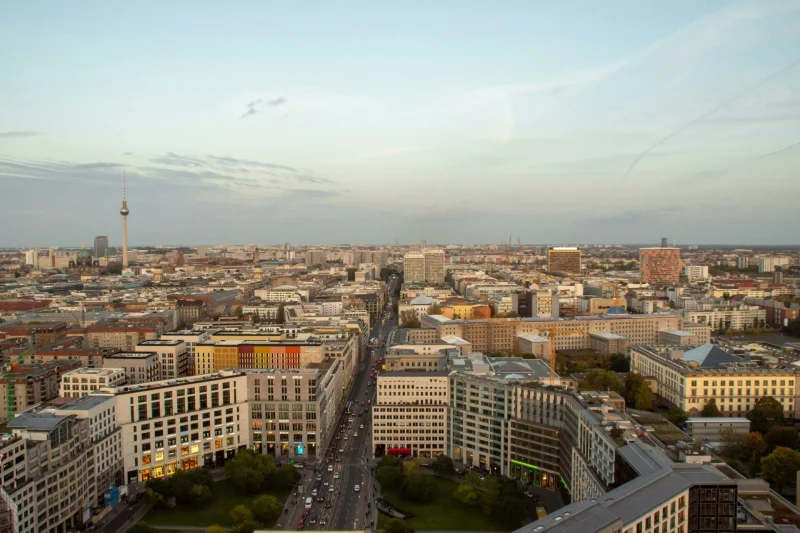
It is worth noting that Munich and Berlin together account for almost half of all investment, at around 440 million euros.
After years of uncertainty, the sector is on the move again – and this is no coincidence.
Who is investing? International players dominate the market
Foreign investors are a key factor driving this momentum.
In the second quarter of 2025, 86 per cent of all hotel transactions were carried out by international buyers.
These include big names such as:
-
Brookfield, which has acquired the entire Generator Hotels portfolio,
-
and Eagle Hills from the United Arab Emirates, which acquired the Mandarin Oriental in Munich for around 150 million euros.
But hotel chains themselves are also actively investing again:
The InterContinental Hotels Group (IHG) opened 14 new hotels in the first quarter alone and has a further 16 in the pipeline.
With the Novum Group, over 50 properties are being converted into Holiday Inn hotels. New brands such as Gana and Candlewood Suites are also making inroads into the German market.
In short: the sector is becoming increasingly professional – and competition for attractive locations is intensifying.
Refurbishment rather than new builds: how repurposing is driving the market
Despite the boom, there is hardly any new construction taking place.
This is because rising construction costs often make new-build projects economically unattractive. The solution: repurposing existing properties.
This is where so-called brownfield developments come into focus. These involve converting older, often vacant buildings – such as office blocks from the 1970s, former care homes or boarding houses – into hotels.
This strategy offers several advantages at once:
-
Existing infrastructure significantly reduces investment costs,
-
shorter development times enable a faster time-to-market,
-
and sustainability considerations (reuse of existing building stock) enhance ESG compliance.
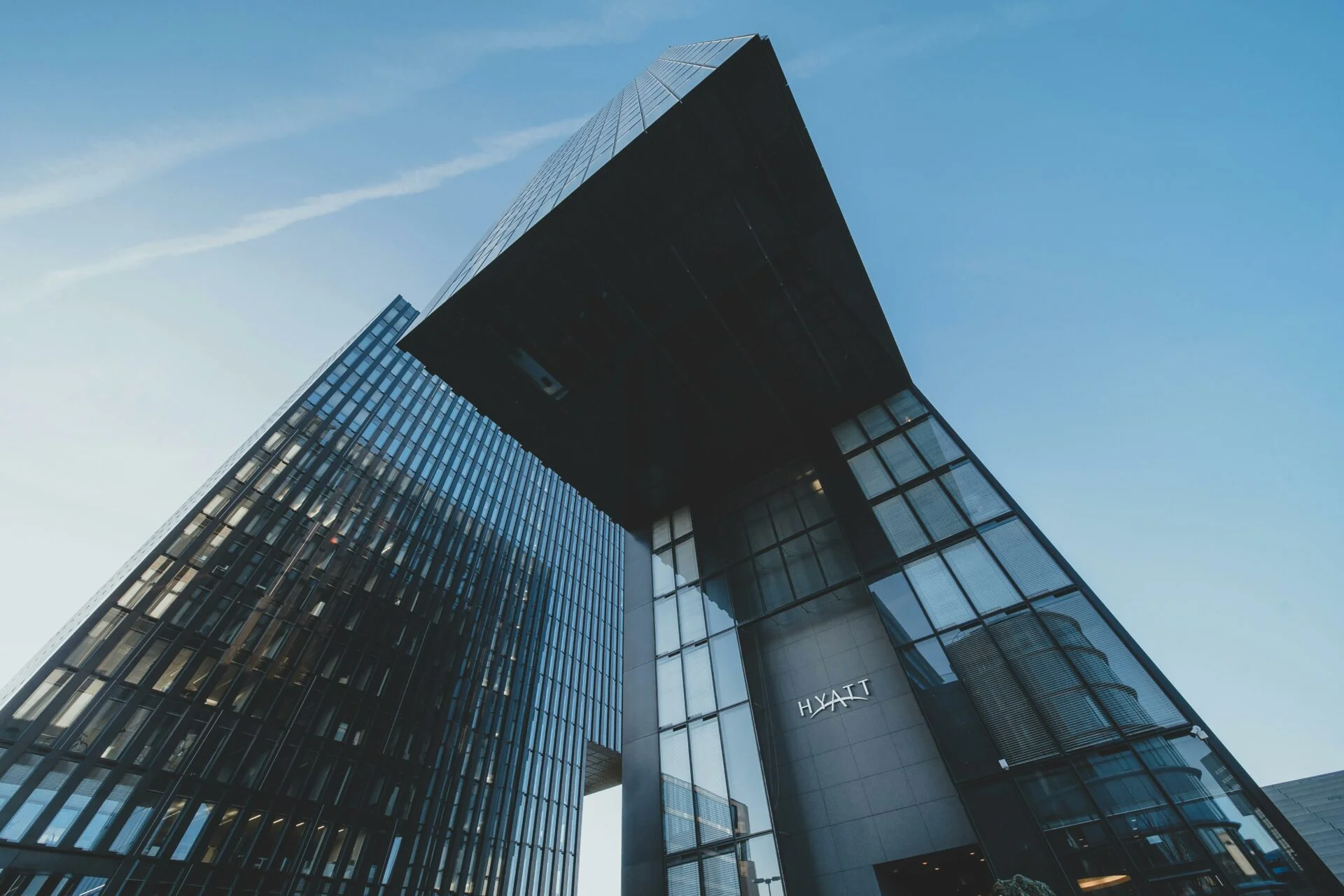
An example: in Düsseldorf, on Harkortstraße, not far from the main railway station, a former car-loading station has been transformed into a modern hotel complex.
Today, the site features three hotels, dining areas on the ground floor and a new pedestrian link – a showcase project for the successful transformation of derelict urban spaces into vibrant urban areas.
The boom in demand: guest numbers back at record levels

The foundation for this success is demand.
According to the Federal Statistical Office, around 496 million overnight stays were recorded in Germany in 2024 – more than before the pandemic and thus a new record.
Whilst business travel remains slightly below pre-crisis levels, leisure and domestic tourism more than make up for this decline.
Of particular relevance to investors:
Hotels are currently generating stable returns of between 5.25 and 5.5 per cent, whilst carrying a low level of risk by international standards.
In times of geopolitical uncertainty and volatile capital markets, German hotel properties are therefore once again regarded as a safe asset class with solid cash flow prospects.
Opportunities for investors: Keep an eye on the potential for repurposing
For investors, the current market situation offers several entry opportunities.
The key factor here is choosing the right property.
What you should look out for:
-
Properties with potential for conversion: Former care homes, boarding houses or apartment blocks are particularly suitable.
-
Micro-location: Proximity to railway stations, airports or tourist hotspots is essential.
-
Regional focus: Alongside traditional prime locations such as Berlin, Munich or Hamburg, leisure regions on the North Sea and Baltic coasts, as well as in the Alpine region, are becoming increasingly attractive.
For existing property owners, it can be worthwhile to specifically prepare their properties for hotel investors.
Smaller investments in fire safety, plumbing connections or flexible floor plans can significantly enhance a property’s marketability.
If this is further combined with an ESG-compliant concept and planned energy efficiency upgrades, the appeal to international funds increases considerably.
Many are looking for precisely this kind of‘plug-and-play’ deal, where they can start operations with minimal effort.
Conclusion: The hotel market is back – and stronger than expected
The German hotel market is experiencing a genuine renaissance in 2025.
With record overnight stays, growing international demand and new usage concepts, it is currently one of the most dynamic property segments in Germany.
Those who invest strategically now can benefit from a combination of growing demand, stable returns and ESG-compliant development.
Whether as a property owner, project developer or institutional investor – now is the time to put the hotel market back on the agenda.