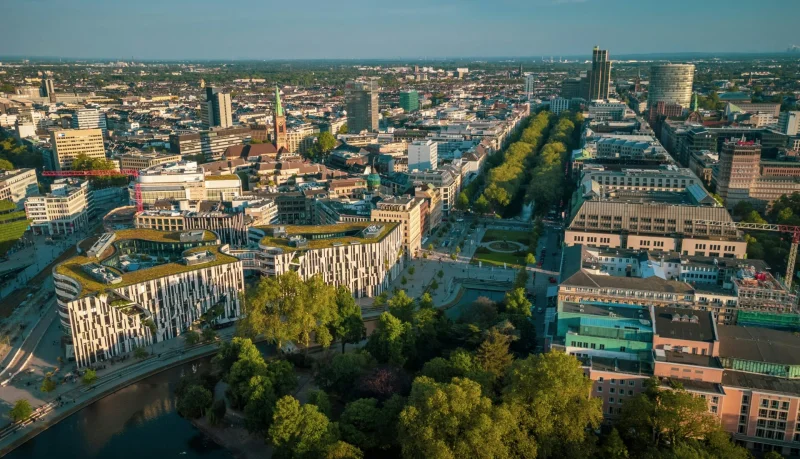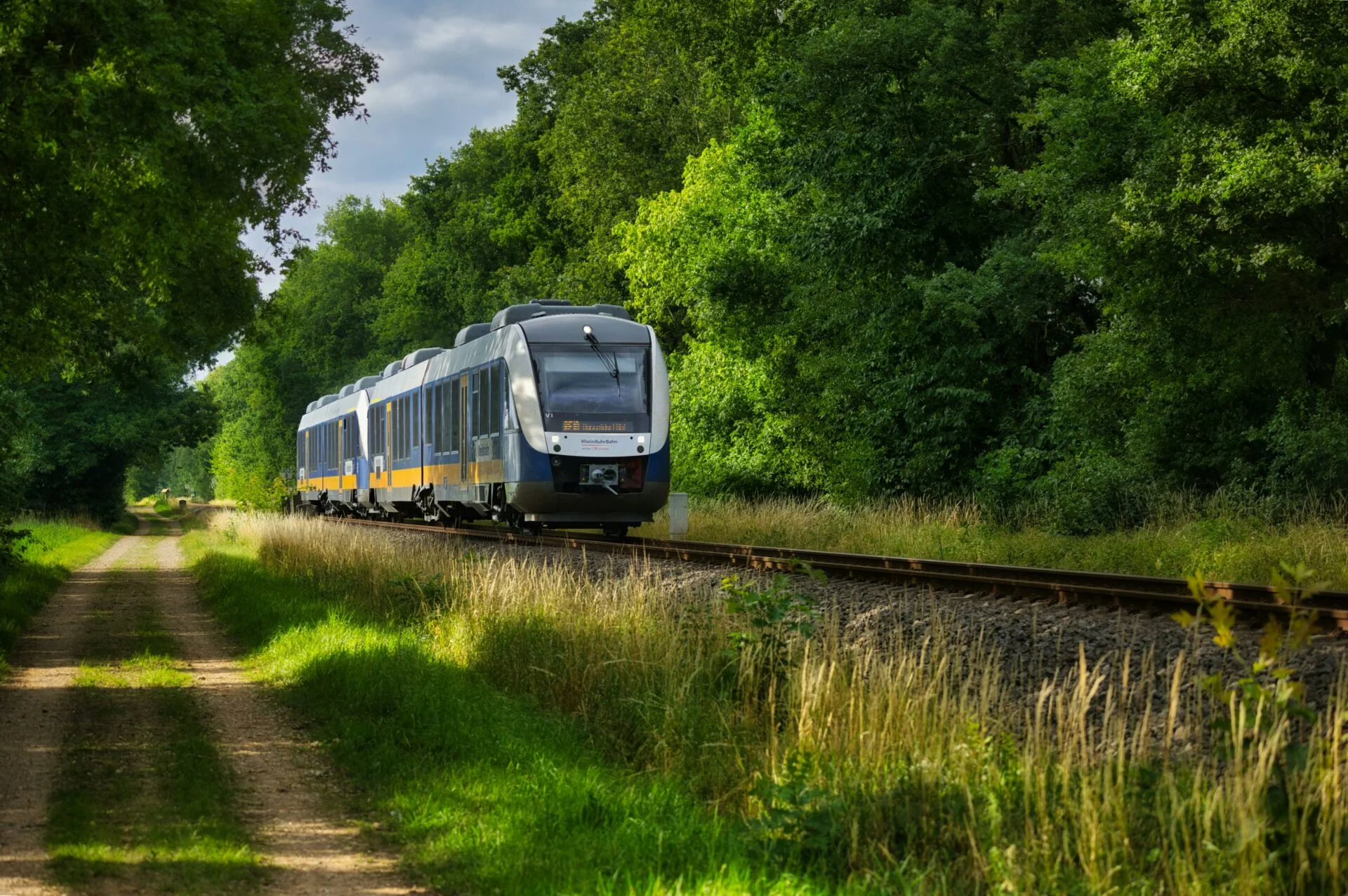
When the 9-euro ticket was introduced in the summer of 2022, it suddenly seemed as though anything was possible. For a nominal fee, people could use almost the entire local transport network in Germany, from the North Sea to the Alps, and from city centres to rural areas.
Alongside the debate on transport policy, an intriguing theory quickly emerged for the property market: if travel became significantly cheaper, people might choose to live further out from the cities. This would take some of the pressure off the expensive major cities, whilst the affluent suburbs and surrounding regions would become more attractive.
You are currently viewing placeholder content from YouTube. To access the actual content, click on the button below. Please note that this will result in data being shared with third parties.
Unlock content Accept the required service and unlock contentThe reasoning behind this sounded convincing. After all, anyone who spends less money on their commute each month is more likely to accept a longer journey. Many market observers therefore expected rising demand and higher property prices in the regions surrounding the major conurbations.
Today, however, several years on, the outcome is sobering. The Deutschlandticket, which now costs 63 euros, has had a far smaller impact on the property market than many had expected. The major boom in the surrounding areas has failed to materialise.
So the big question is: why?
High expectations met with a sobering reality
Looking back, it is clear that the debate surrounding the Deutschlandticket was often shaped more by hopes than by actual market data.
Particularly insightful is a meta-study by the Ariadne project at the Potsdam Institute for Climate Impact Research, which evaluated various studies on the Deutschlandticket. This study brought together mobile phone data, traffic counts, surveys and empirical analyses of mobility behaviour.
The result is surprising at first glance: whilst the Deutschlandticket has changed the behaviour of many people, it has generated significantly less new mobility than originally expected.
Most users are not travelling any more frequently than before. Instead, they have simply switched their mode of transport. This is precisely where the ticket’s real impact lies.
Fewer car journeys, but no new housing boom
In fact, research shows that a significant proportion of journeys made using the Deutschlandticket would previously have been made by car. Depending on the study, between 12 and 16 per cent of journeys have shifted from private cars to local public transport. As a result, the number of kilometres travelled by car has fallen noticeably.
What is particularly interesting is that this effect is most pronounced on longer commutes – precisely where many affluent suburban communities are located. People who commute 30 kilometres or more every day to the nearest major city benefit disproportionately from an affordable local transport ticket.
In theory, this should give the property markets in the surrounding areas a boost. Yet so far, this has only happened to a very limited extent. The reason for this runs deeper than the issue of ticket prices.
The real problem is infrastructure
The Deutschlandticket makes travel cheaper. However, it does not automatically make it better. For commuters, it is not just the cost of the ticket that matters in the end. What is crucial, above all, is how reliably and quickly they can reach their destination.
Anyone who has to wait for delayed trains every morning, sit on overcrowded regional trains or change trains several times will find their commute a burden, even if the ticket is cheap. This is precisely where the Deutschlandticket reaches its limits.
This is because the structural problems of the German rail network remain. Many routes are overloaded, stations are in need of refurbishment and key connections are inadequately developed. At the same time, Deutsche Bahn is grappling with an enormous need for investment.
In other words: the ticket subsidises access to the system, but does not automatically improve its quality. And that is precisely why its impact on the property market remains limited.
Why property prices react primarily to short-term factors
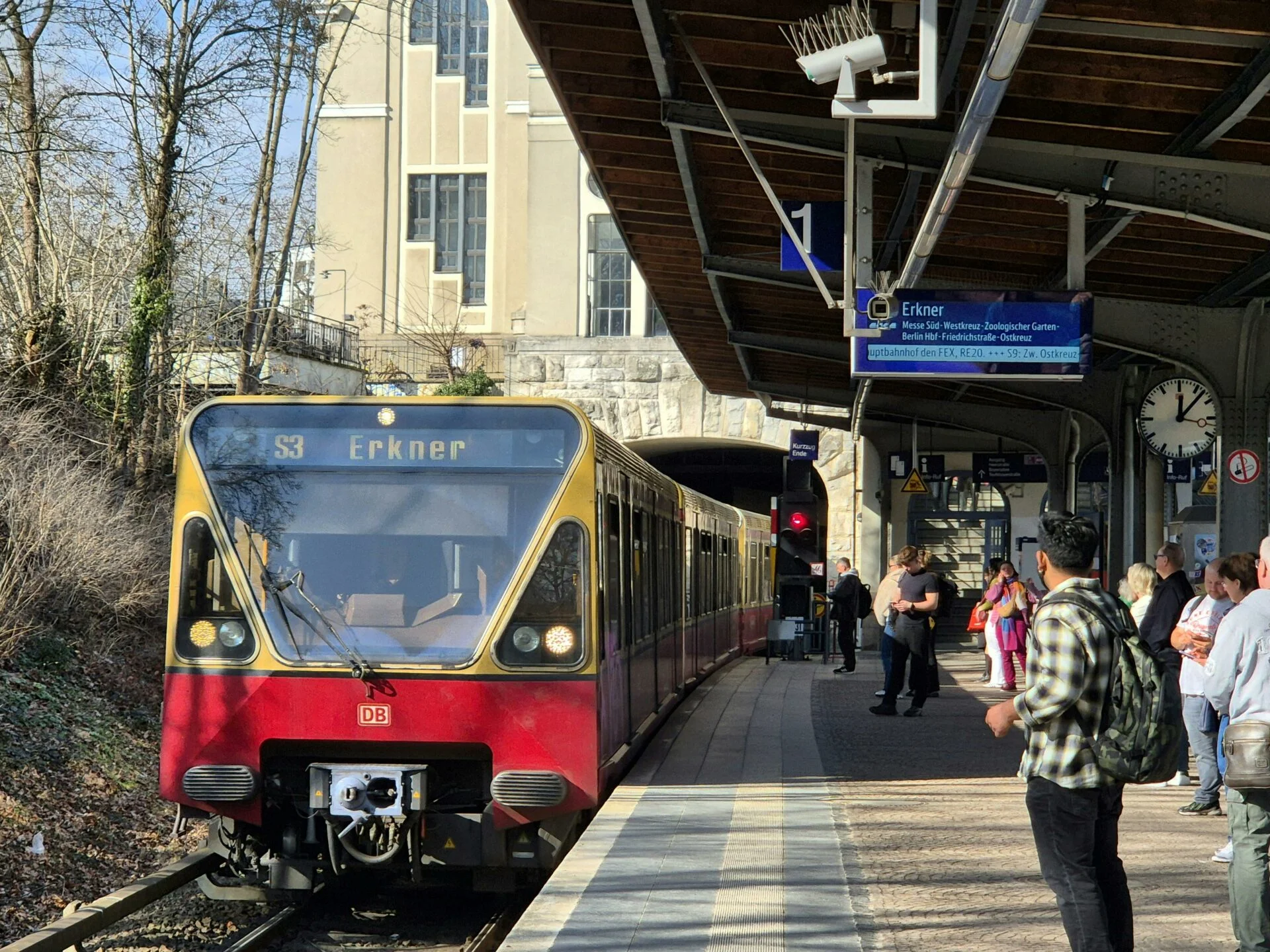
For the property sector, one insight is particularly important: people do not buy or rent based solely on cost, but on accessibility.
A study conducted by BPD Immobilienentwicklung in collaboration with the German Economic Institute analysed precisely this correlation. The study examined the housing markets in the regions around Cologne, Stuttgart and Karlsruhe.
The result was clear. It is not the price of a ticket that has a significant impact on property values, but the actual journey time.
The faster a location is connected to the city centre, the higher property prices tend to be. If the commute time is significantly reduced, property values rise measurably. Conversely, locations lose their appeal if transport links are poor or long journey times have to be accepted.
This may sound obvious at first, but it is often underestimated in political debates. After all, for most commuters, time is the scarcest resource of all.
An example from the Cologne area
This connection is particularly evident in the greater Cologne area.
Analyses there show that comparable new-build flats can vary considerably in price depending on their public transport links. Flats in well-connected locations can fetch several hundred euros more per square metre than properties with poor transport links.
The reason for this is not lower ticket prices or additional subsidy schemes. It is solely because people can reach the city centre more quickly and reliably.
For buyers and tenants, good transport links ultimately mean a better quality of life. Less time on the train means more time for family, leisure or work. It is precisely this benefit that is factored into property prices.
The real winners are locations with good infrastructure
However, this does not mean that affluent suburban areas have lost their appeal. On the contrary.
The winning regions of the coming years are likely to be precisely those locations that consistently invest in their transport infrastructure. Where new suburban rail lines are being built, tram networks are being expanded or service frequencies are being improved, the economic appeal of entire neighbourhoods and local authorities is transformed.
One particularly interesting example illustrates just how significant this effect can be. If a new transport link significantly reduces journey times from a residential area, the resulting increase in property values can, in some cases, fully offset the infrastructure investment.
For towns and local authorities, this is a remarkable insight: infrastructure not only creates mobility, but also directly boosts property values.
What investors can learn from this
This has an important implication for property investors.
Anyone focusing on outlying locations today should pay less attention to the development of the Deutschlandticket and focus much more on specific infrastructure measures. What matters is not whether the monthly ticket will cost 49, 63 or 79 euros in future. What matters is whether the actual journey time is reduced.
That is why it is worth taking a close look at planned transport projects in any location analysis. New S-Bahn lines, tram extensions, additional stations or more frequent services can have a much greater long-term impact on property prices than any fare reform in local transport.
Regions where infrastructure investment coincides with population growth become particularly attractive. It is often in these areas that the most dynamic housing markets emerge.
Conclusion: The Deutschlandticket was a sensible move, but not a game-changer for the property market
The Deutschlandticket has undoubtedly had positive effects. It makes it easier to access local public transport, reduces car traffic and makes travel more affordable for many people. However, it has not lived up to expectations as a major driver of rising property prices in the surrounding areas.
The reason is simple: property markets do not react primarily to the cost of mobility, but to the quality of mobility.
People do not move further out simply because the ticket is cheaper. They move further out when they can reach their destination quickly, reliably and comfortably.
The most important lesson for investors, property developers and local authorities is therefore this: it is not cheap fares that create property value. Good transport links do.