If you didn’t know any better, you might think that German properties were real climate culprits. The average age of a residential property is 60 years. If we are to meet our climate targets by 2045, 80 per cent of the housing stock must either be energy-efficiently refurbished or completely replaced. This is no small undertaking, given that the buildings sector accounts for around 36 per cent of total energy consumption and is responsible for around 30 per cent of CO₂ emissions.
You are currently viewing placeholder content from YouTube. To access the actual content, click on the button below. Please note that this will result in data being shared with third parties.
Unlock content Accept the required service and unlock contentThe environmental necessity is obvious. But doesn’t this raise the crucial question: does green building also make financial sense? Does sustainability not only help the environment, but also your bank balance?
What does sustainable building actually mean?
Sustainable construction encompasses the planning, construction and management of buildings that have the least possible negative impact on the environment, health and resources throughout their entire life cycle. This means, for example:
-
the use of recycled concrete
-
efficient insulation and high-quality windows
-
Photovoltaic systems on roofs
-
modern heat pumps instead of fossil fuel heating systems
Of course, the construction costs are higher than with conventional building methods. But is this additional investment actually worth it?
Figures that speak for themselves
An analysis by the German Energy Agency (2022) provides clear answers.
-
Construction costs: Conventional €2,500 per m², Energy-Efficient House €2,800 per m², i.e. €300 more.
-
Running costs over 30 years: conventional €1,800 per m², energy-efficient house €950 per m².
-
Maintenance costs over 30 years: conventional €1,400 per m², energy-efficient house €900 per m².
This results in total costs of €5,700 per m² for conventional construction, compared with €4,650 per m² for an energy-efficient house. The break-even point is reached after just 12 years. From that point onwards, the sustainable property works out cheaper.
Subsidies and tax benefits
The good news is that sustainable construction is not only attractive because of the long-term cost savings. The government and legislators also actively support investors:
-
Subsidised loans: For an ‘Effizienzhaus 40’ property with QNG certification, loans of up to €150,000 per residential unit are available at an interest rate of just 0.52% (as of May 2024). Calculated over 30 years, this results in a positive interest rate differential of up to €45,000 for every €500,000 loan.
-
Tax benefits: Since 2023, Section 7b of the German Income Tax Act (EStG) has allowed a special depreciation allowance of 5 per cent per annum over four years for climate-friendly new builds, amounting to a total of 20 per cent in addition to the standard depreciation. Example: For a project worth €3.8 million, this results in additional depreciation of €760,000. At a tax rate of 42 per cent, this corresponds to a tax saving of around €319,000.
Sustainability also pays off when it comes to letting and selling
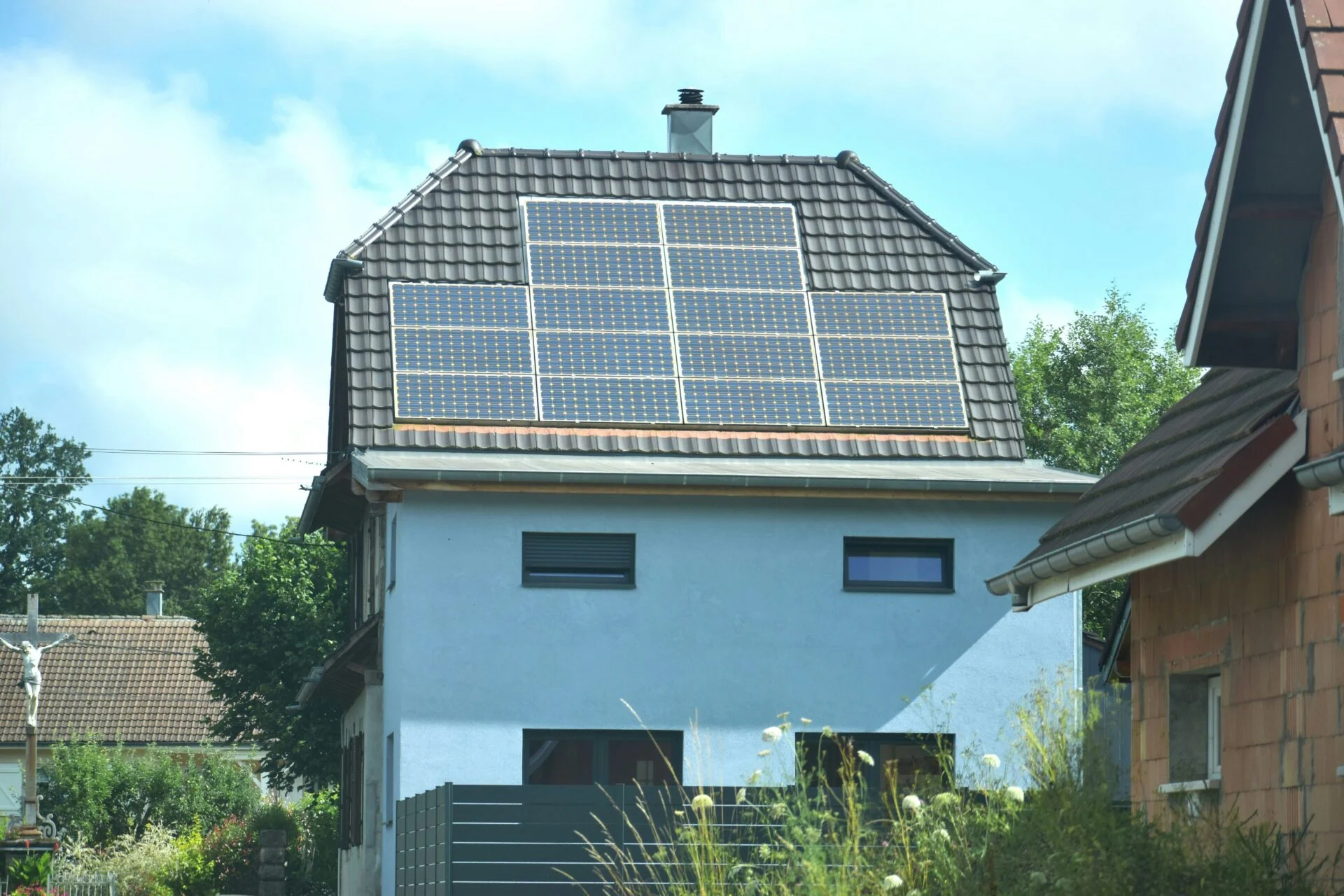
Sustainable buildings are not only cheaper to run, but also more attractive on the market.
-
Rental income: For every drop in energy efficiency class , the rent falls by an average of €0.21 per m². A Class A flat commands an average of €2.85 more per m² than a comparable Class C flat.
-
Sale prices: The market penalises poor energy efficiency significantly. For every class drop , the sale price of residential property falls by an average of 7.5 per cent. The discount from Class B to Class C is already 15 per cent, and in some cases as high as 20 per cent for multi-family dwellings . This phenomenon is known as the ‘Brown Discount ’. Conversely, energy-efficient properties command a ‘Green Premium’, i.e. a price premium.
Particularly relevant: institutional investors such as insurance companies and pension funds are increasingly investing only in ESG-compliant properties. In 2022, the share of certified green buildings in the total German commercial investment market stood at 30 per cent; in 2023, despite market weakness , it remained at 27 per cent.
Practical example: Circular construction
An exciting pilot project is the new district archive in the town of Viersen. The building was constructed using a modular design and recycled materials. Although the final construction costs of €16.6 million were significantly higher than the original budget of €11.6 million, there are benefits over the building’s entire life cycle.
-
Energy cost savings: €3.4 million
-
Maintenance savings: €2.3 million
-
Residual value at end of life: €1.2 million
-
CO₂ cost savings: €140,000
In total, despite higher construction costs, the effective cost amounts to around €7 million, which is significantly cheaper than a conventional alternative.
Conclusion
Green building is no longer merely a matter of idealism, but a tangible economic benefit.
-
Lower running costs
-
Government subsidies and tax breaks
-
Higher rents and sale prices
-
better financial viability and marketability
Anyone who builds or renovates sustainably today secures not only environmental benefits but also a financial return. The ‘Green Premium’ is a reality, whilst the ‘Brown Discount’ is a risk that nobody can afford to take any longer.
The answer is therefore clear: sustainability pays off. For the environment, for society and for your portfolio.